To build an effective monitoring and alerting system, core elements include: basic metric collection (CPU, memory, disk, network), log and performance metrics at the host and application layers, network link and latency monitoring, as well as alarm rules and notification channels.
Additional considerations in the Vietnam region include: network link quality, cross-border latency, and API stability of local cloud providers. All of these should be incorporated into the system through appropriate probes and compliant acquisition strategies.
Divide metrics into three layers: infrastructure layer, platform/middleware layer, and business/application layer. Prioritize observability at the infrastructure layer, then gradually deepen into key business transactions (such as API request success rate and response time).
Use lightweight agents to collect host metrics, use Application Performance Monitoring (APM) to capture transaction tracking, and centralized log management for easy post-event analysis.
Confirm agent coverage, metric retention cycles, timing library capacity, and permission policies.
An effective alert strategy should follow the principles of "precision, hierarchy, and actionability": only alert to events that can trigger operations or business actions; Classified by severity (P0-P3); And clarify the handler and operational steps for each alert.
For the Vietnamese cloud environment, it is recommended to introduce short-term suppression and adaptive thresholds to address network jitter or high-concurrency short peaks, avoiding the large number of false positives caused by occasional jitter.
Noise reduction is achieved by using silence windows, suppression rules, aggregated alarms (merging issues of the same type), and anomaly detection-based alerts.
P0: The entire site is unavailable or key transactions fail; P1: Degradation in critical service performance; P2: Resource bottleneck approaching threshold; P3: Information alerts or upgrade suggestions.
By integrating email, SMS, instant messaging (such as commonly used Vietnamese platforms like Zalo, Slack, WeChat/WeCom), and automated tickets, the escalation path and SLA response time are clearly defined.
Common and mature open-source/commercial combinations include: Prometheus + Alertmanager + Grafana (timing monitoring and alerting); ELK/EFK (Log Aggregation); Jaeger/Zipkin (distributed tracking); and commercial APM and monitoring platforms for quick hands-on use.
When choosing, consider the skills of Vietnamese network exports, data sovereignty, and operations teams: if latency is sensitive, consider deploying monitoring backends in the Vietnam Region to reduce cross-border write latency.
Uses the Agent and Exporter layer→ Aggregation and Storage (Prometheus/TSDB), → Visualization and Alerts (Grafana/AlertManager), → Notification and Automation (Webhook/Runbook).
Prometheus uses federated or remote write mechanisms, alerts employ multi-active AlertManager clusters, and the log system configures indexing policies to control costs.
Evaluate log retention policies and data encryption, choose on-premises or cloud storage to meet compliance requirements and control costs.
Automated responses aim to allow the system to attempt self-healing first, and only intervene manually when automation fails or risks are high. Common automation includes restarting services, scaling instances, cleaning temporary files, or temporary routing.
To ensure safety and reliability, each automated action needs to be set with rollback policies, power-based checks, and permission controls, and one-click execution or Playbook links embedded in alerts.
Linking Runbooks (operation manuals) within the alert platform and implementing a closed loop from alerts to work orders to execution via ChatOps, recording each change for review.
1) Identify automatable, low-risk scenarios; 2) Write and test scripts; 3) Practice in the test environment; 4) Push to production and set up approval/audit.
Evaluate automation effectiveness and risks through metrics such as MTTR, alert rate, and automation success rate.
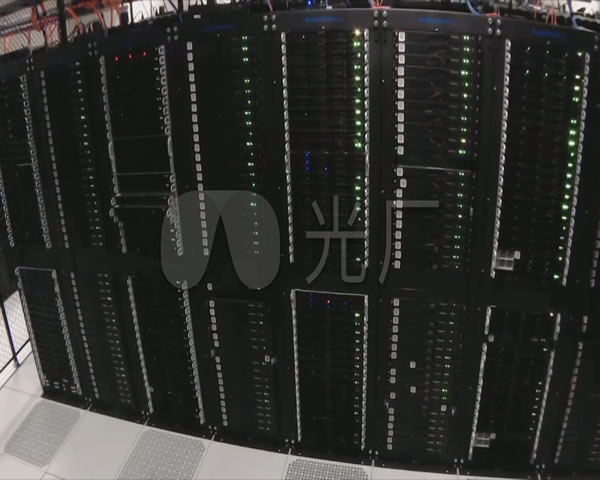
Continuous optimization relies on closed-loop improvement: regularly reviewing alarm lists, analyzing false/missed positives, evaluating alert response records, and updating the runbook. Introduce SLO/SLA management to align alert strategies with business objectives.
At the same time, a knowledge base and training mechanism are built to enhance local operations teams' mastery of platform tools and reduce reliance on external support.
Using historical alarm data, we calculate noise ratio, alarm fatigue, and the actual execution effect after triggering various alarms, adjusting thresholds and strategies based on the data.
Machine learning-based anomaly detection, event correlation analysis, and root cause localization can be gradually introduced to enhance the ability to detect and locate complex faults.
Establish quarterly inspection and optimization meetings, treating the monitoring system as a continuous product iteration, dynamically adjusting monitoring and alert settings according to business rhythm (such as promotions and events).
- Latest articles
- Players Must Check Out The Temporary Fixes And Reconnection Methods When The Singapore Server Is Unresponsive
- How To Customize Native IP IPs For Korean Games For Esports Platforms, Ensuring Low Latency And High Concurrency Access
- Korea E3 Network CN Compliance Requirements And Local Service Provider Selection Guide
- Foreign VPS Synchronizes With U.S. Time And System Clock Drift Protection Strategies
- User Feedback Summary: Does Alibaba Cloud Have A Native Hong Kong IP? Stability Evaluation In Different Scenarios
- A Comparison Of Free Versus Paid Korean Browser Game Servers And Recommended Cost-performance Lists For Chinese Players
- A Guide For Developers On Japan CN2 Cloud API Integration And Automated Deployment
- Detailed Explanation And Selection Tips For Online And Offline Channels Where To Buy Native Taiwanese IPs
- Development Support For Taiwan Server Online Game Cloud Space, Providing SDKs And Interfaces For Mobile Game Developers
- Method For Accelerating The Integration Of Cloud Server Addresses And Local CDNs In The Vietnamese Market
- Popular tags
-

How To Enjoy Vietnam Vps 1gbps High-speed Network At Low Cost
this article will introduce how to enjoy vietnam's 1gbps high-speed vps network at a low cost, and provide detailed steps and suggestions to help users easily choose the right service. -

Vietnam Cloud Server Rental Recommendations And Characteristics
this article introduces the rental recommendations and characteristics of cloud servers in vietnam to help users better choose the appropriate cloud server. -

Sharing Practical Methods For Security Strengthening Vietnam Vps Ladder Encryption Settings And Preventing Leakage
for users who use vietnam vps to build a proxy (ladder), it provides practical security methods from system reinforcement, encryption protocol selection to leakage prevention and long-term monitoring, including specific configuration suggestions and precautions.